Hawzu vs Qase a modern Qase alternative
Qase and Hawzu are both modern test management platforms. Hawzu adds dedicated release management, a native defect lifecycle, and untiered analytics — plus a direct Qase importer — and every feature is on every plan, including the free one.
Releases and analytics, built in.
Qase and Hawzu are closer than most pairs on this site
Both are modern, both are fast, both were built recently enough to have skipped the mistakes of the previous generation. The difference is where each one decides the job ends.
Qase is a good product. The interface is quick, the automation reporters cover the frameworks people actually use, and the API and CLI are well documented. If you're picking between Qase and a legacy tool, pick Qase.
Where the two diverge is scope. Qase is a test management tool that expects your defects to live in a tracker and your milestones to stand in for releases. Both are reasonable decisions — they keep the product focused — but they mean the tool holds one part of the picture. A milestone knows which tests are attached to it; it doesn't know whether the release is safe to ship.
Tiering is the other thing worth checking before you commit. Advanced reporting sits on a higher plan, AI is credit-metered, and the free tier stops at three users. None of that is unusual, but it means the price you model at evaluation and the price you pay at forty testers with real reporting needs are different numbers.
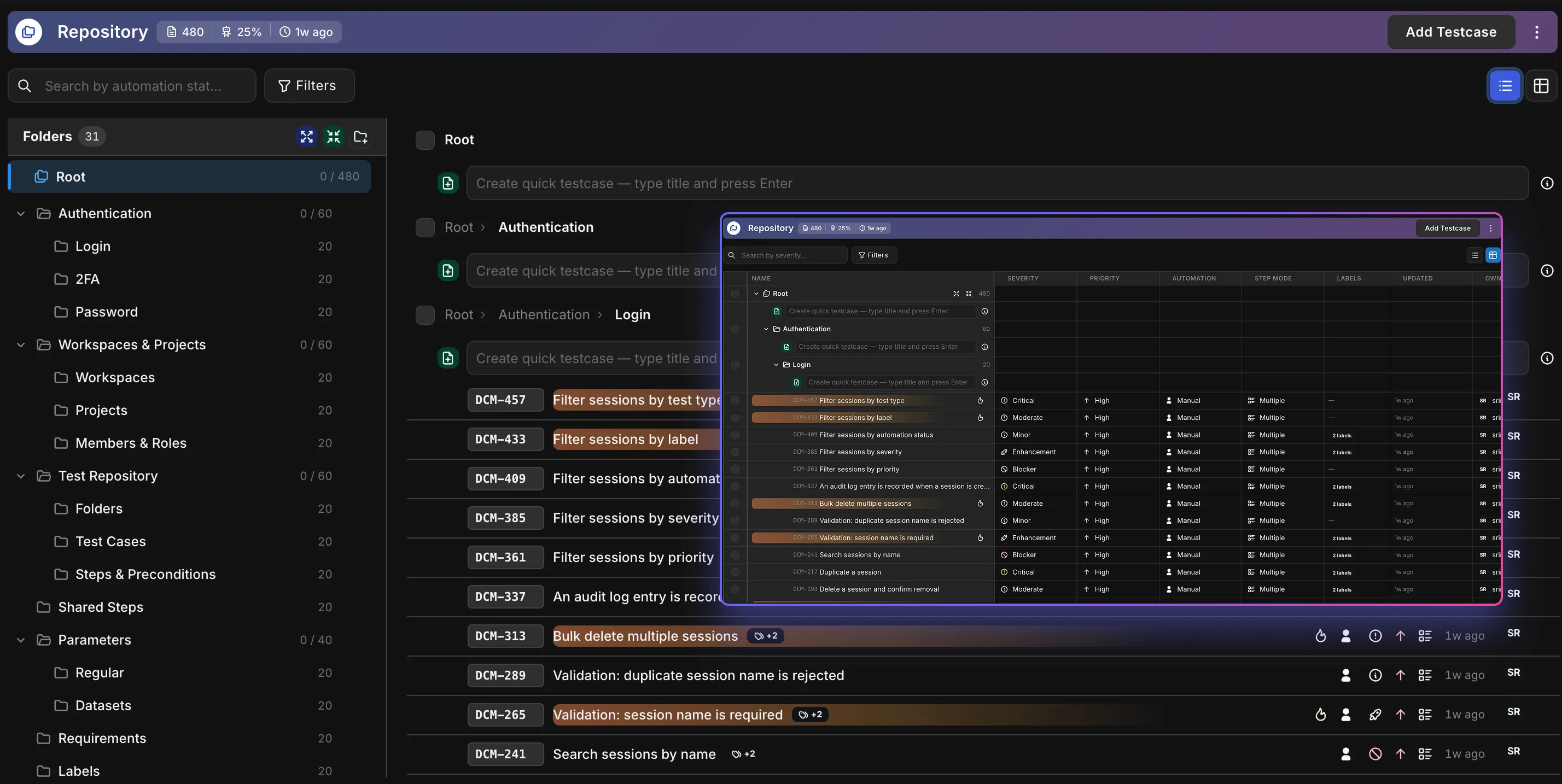
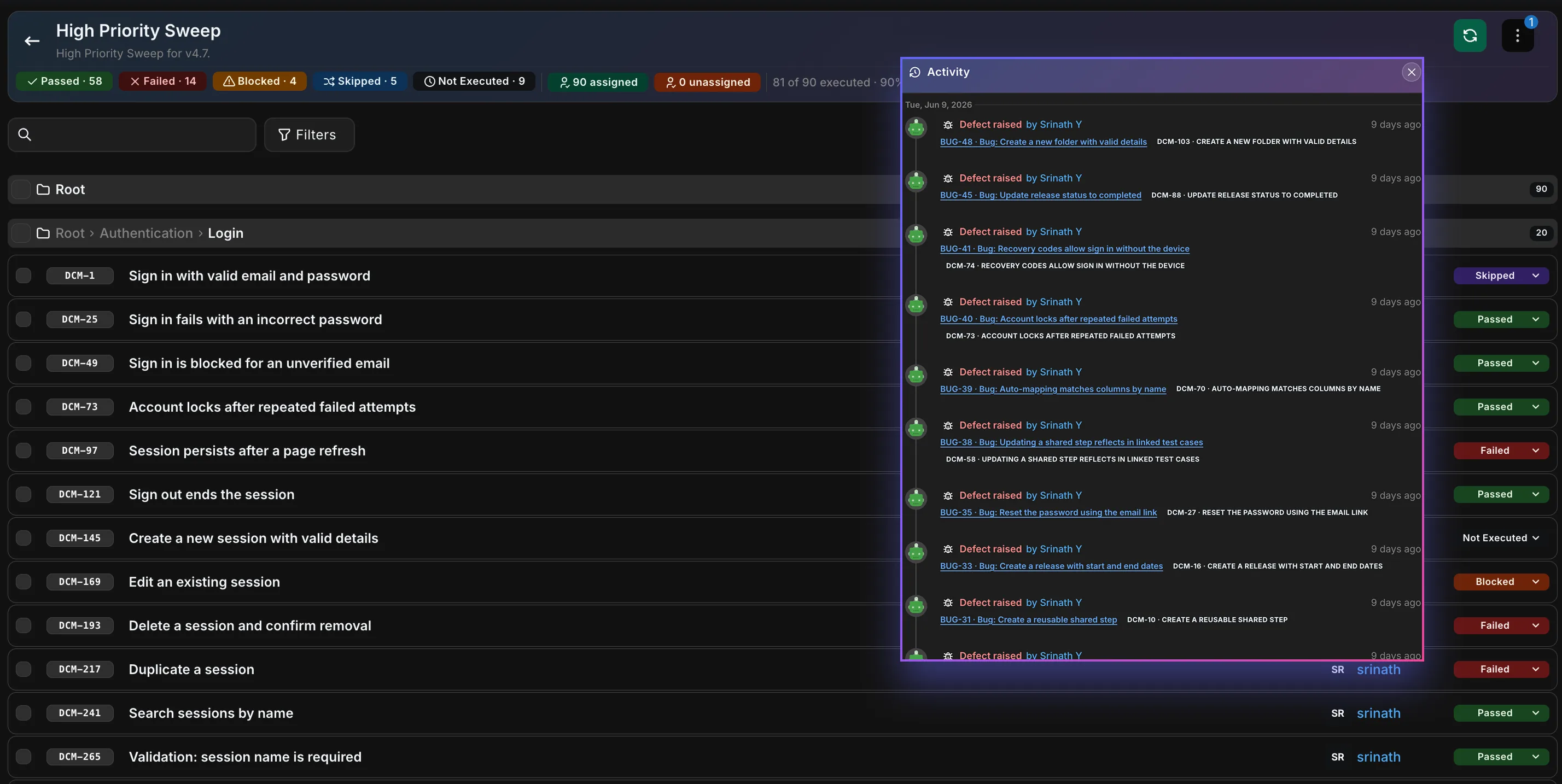
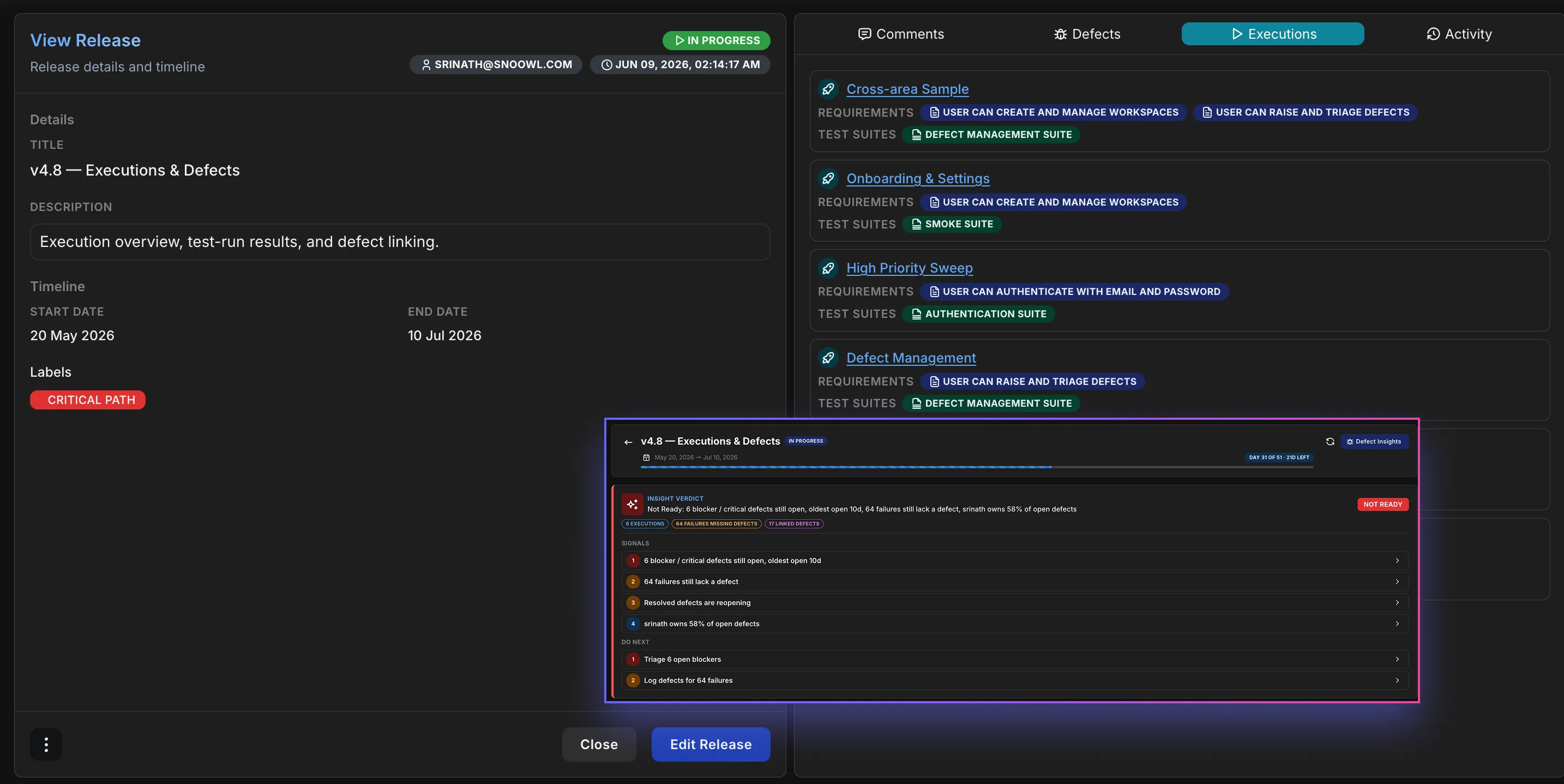
Hawzu keeps the parts Qase hands off. Defects are native and tied to the failing step, with AI duplicate detection and aging analytics. Requirements are real objects with hierarchy and coverage roll-up. And a release is something you gate executions to, ending in a scored go/no-go and a frozen sign-off snapshot. If you're already happy with Qase, the honest question is just whether you want those three things in the same tool.
See Hawzu in action
Anyone can claim they beat Qase. Here's exactly what we built.
Hawzu vs Qase, at a glance
Comparison reflects publicly available information and is kept as fair as we can make it. Pricing checked 3 Sep 2026 against Qase's own published pricing. Details may change — check their site for the latest. Last updated 13 Sep 2026.
Why teams pick Hawzu
Dedicated release management with release-gated executions — not just milestones.
Native defect lifecycle built in — not integration-first, light defect tracking.
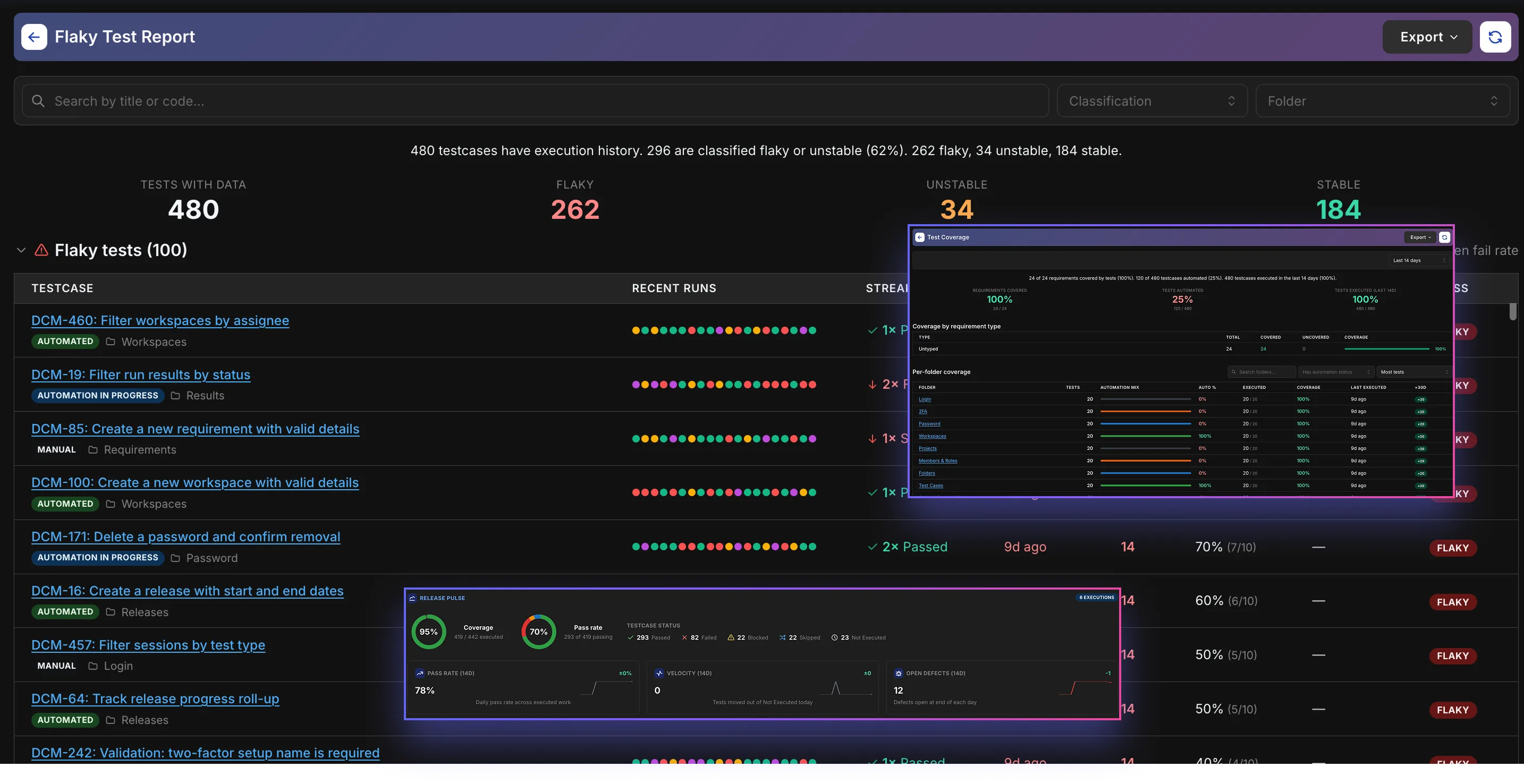
Built-in Observatory analytics — not advanced reporting gated behind a higher tier.
AI test case generation and semantic search on every plan, with nothing to buy — no per-credit overage bill.
Every feature, no per-seat bill — free for five people, $20 per member after.
The job reaches the tool you are already in, too. A client connected over MCP asks about cases, runs, defects and release readiness — always reading, never writing, never past your own access.
When Qase might still make sense
It's a mature, well-funded product with a longer track record, a public roadmap and a large community.
Excellent automation support: a broad set of first-party reporters for popular frameworks, and well-documented API and CLI tooling.
Cheaper at the very smallest size: their free tier covers 3 users with no paid step until you want more, where ours caps at 5 and then bills per member.
Common questions
How is Hawzu different from Qase?
Both are modern test management platforms and the repository experience is comparable. Hawzu adds the three things Qase deliberately hands off: a native defect lifecycle rather than light or integration-based defects, requirements as real objects with coverage roll-up, and dedicated release management with release-gated executions and a scored go/no-go.
Can I import my Qase data directly?
Yes — Qase is a first-class source in Hawzu's import wizard, not a generic spreadsheet path. Export from Qase as JSON, CSV or XML, and Hawzu maps the fields for you: suites become folders, and images or file links embedded in your cases are re-hosted into Hawzu automatically so nothing breaks when it stops pointing at Qase. It's the smoothest migration of any tool on this site.
Is Hawzu free like Qase's free tier?
Both are permanent, and the difference is what you get rather than how long. Qase's free plan covers 3 users but withholds custom fields, dashboards, integrations and AI. Hawzu's covers 5 people with every feature switched on, including the AI — the paid plans add size, never capability. Above that we're $20 per member against their $35.
Qase meters AI with credits. How does Hawzu handle it?
AI test case generation and semantic search are included, with no credit balance to track. Both are grounded in your real test data — generation works from the requirements and files you attach, and it cannot cite a requirement you didn't supply; semantic search runs over your own defects.
What's the practical difference between a Qase milestone and a Hawzu release?
A milestone groups test runs by a date or a version label. A Hawzu release is an object executions are gated to: coverage is measured against the requirements in that release, defects are counted against it, burndown tracks it, and it terminates in a scored readiness verdict with a frozen snapshot you can hand to whoever signs off.
Does Hawzu have reporters for our test frameworks?
Not the first-party reporter library Qase has, and that's a fair gap. Hawzu takes results either as a JUnit or xUnit XML report posted to a single endpoint — which most frameworks emit natively — or through the REST API with a scoped token. If you rely on a framework-specific Qase reporter, expect to write a short posting step instead.
Try Hawzu free
Every feature on every plan. Free for five people, $20 per member after — no credit card.